Quantum Simulations with Multicomponent Ultracold Atoms
Alessio Celi
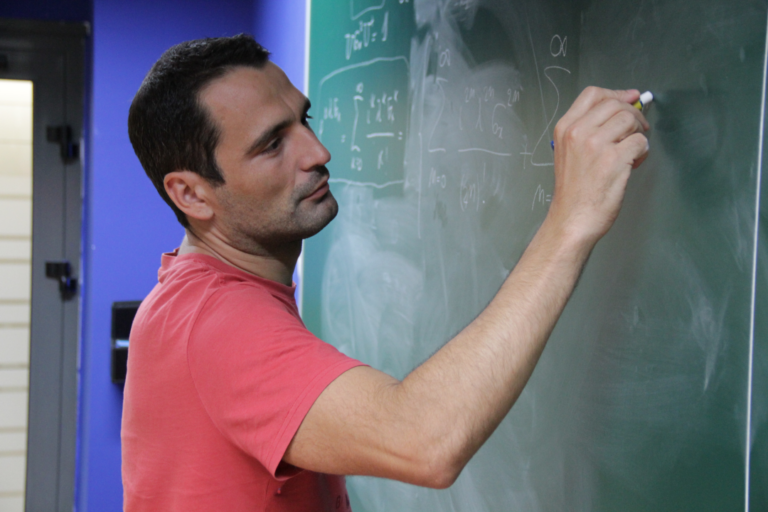
Alessio Celi is a theoretical physicist and Associated Professor at the Autonomous University of Barcelona (UAB). His research focuses on quantum simulation of many-body physics in atomic systems, bridging high-energy, atomic, and condensed matter physics. He develops experimentally viable schemes to emulate phenomena such as quantum magnetism, topological order, and Abelian and non-Abelian gauge theories. After postdoctoral and senior research positions at the University of Barcelona, ICFO, and the University of Innsbruck, he joined UAB in 2019, where he leads an independent research line on quantum simulation of gauge theories. His work is internationally recognized, with publications in leading journals and invited talks at major conferences.
Luca Barbiero
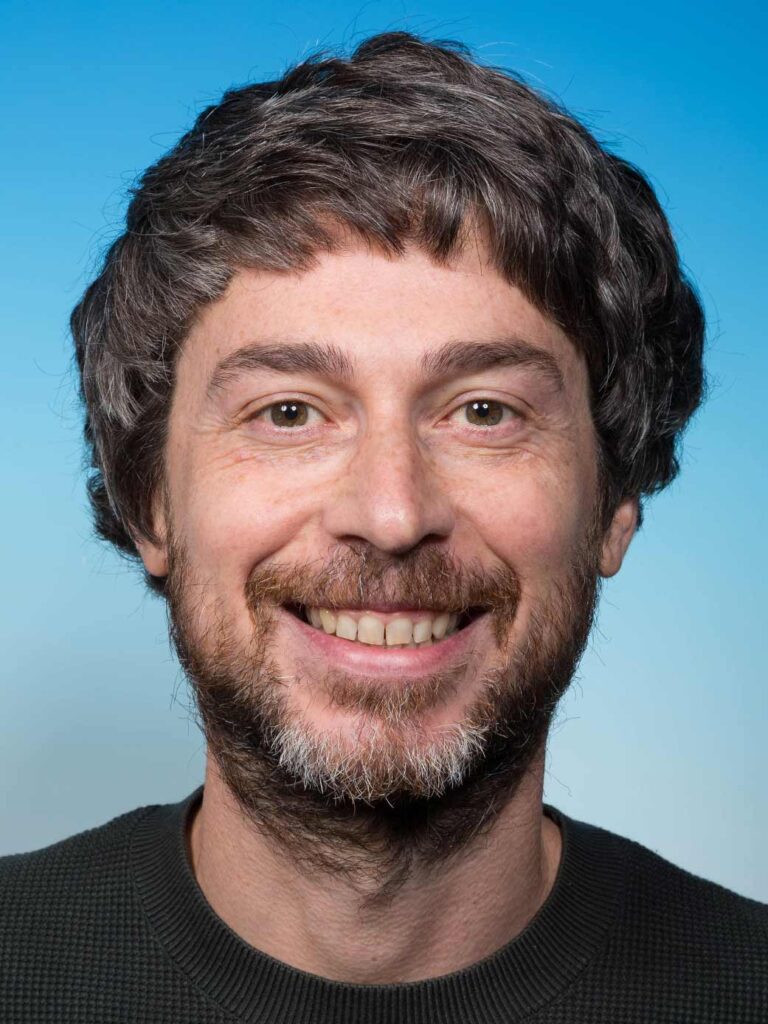
Luca Barbiero is an Assistant Professor of Theoretical Physics of Matter at the Politecnico di Torino (Italy), within the Department of Applied Science and Technology (DISAT). His research focuses on quantum simulations, quantum computing, and topological insulators, with particular emphasis on theoretical modeling of complex quantum systems. He is a member of the Nanophysics and Quantum Systems group at the Institute of Condensed Matter Physics and Complex Systems, which promotes integrated theoretical, computational, and experimental approaches. He is the Principal Investigator of the nationally funded project DiQuT – Dipolar Quantum Simulator of Topological Phases (2023–2025) and supervises PhD research in theoretical physics.
Hrvoje Buljan
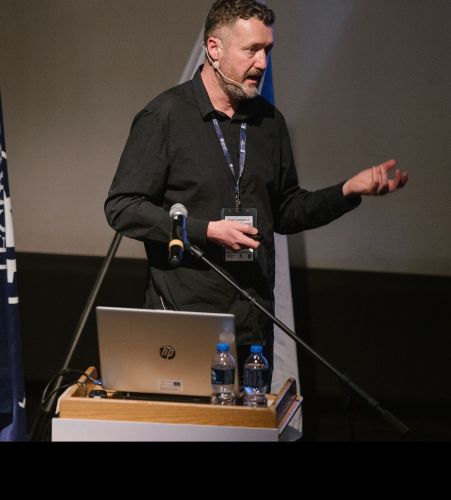
Hrvoje Buljan is a Full Professor at the Department of Theoretical Physics, Faculty of Science, University of Zagreb. His research focuses on photonics, condensed matter physics, and quantum ultracold atomic gases, with internationally recognized contributions to graphene plasmonics, topological systems, and nonlinear optics. He has held visiting positions at institutions such as MIT and Nankai University, led major national and EU-funded research projects, and supervised numerous doctoral and graduate theses. Prof. Buljan is a recipient of several prestigious scientific awards, a full member of the Croatian Academy of Sciences and Arts, and currently serves as President of the National Council for Science, Higher Education and Technological Development of Croatia.
Piotr Deuar
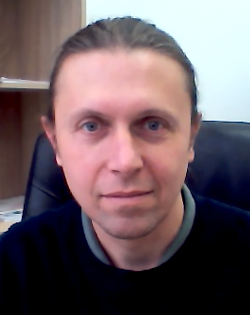
Piotr Deuar is a theoretical physicist at the Institute of Physics, Polish Academy of Sciences, where he heads the Quantum Noise Group and currently serves as Deputy Director. His research focuses on the dynamics of quantum gases and other quantum many-body systems, with emphasis on nonequilibrium phenomena, quantum and thermal fluctuations, and advanced stochastic phase-space simulation methods. He has made significant contributions to the modeling of quantum droplets, dissipative quantum systems, and scalar-field (“fuzzy”) dark matter from an ultracold-atom perspective. His work is supported by competitive national funding, including a National Science Centre grant (2023–2027).
Thomás Fogarty

Thomás Fogarty is a senior staff scientist at the Okinawa Institute of Science and Technology Graduate University in Japan, where he works in the Quantum Systems Unit. His work investigates non-equilibrium dynamics in ultracold gases and methods for their rapid control, especially in strongly correlated multicomponent systems and in the study of polarons. In particular, he is interested in the thermodynamics of these quantum systems and in exploring how correlation and interaction effects can enhance the performance of quantum energy devices and improve the precision of quantum sensors.
mariusz gajda
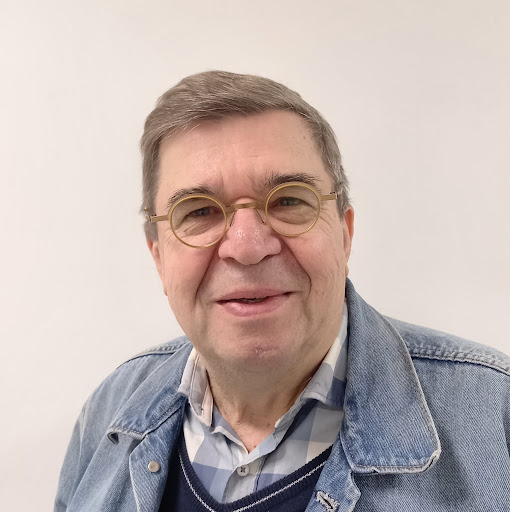
Mariusz Gajda is a Full Professor at the Institute of Physics, Polish Academy of Sciences. His research addresses fundamental aspects of ultracold quantum gases, with a focus on many-body correlations and emergent states of matter. He is internationally recognized for theoretical work on Bose–Einstein condensates, quantum droplets, dipolar gases, Bose–Fermi mixtures, optical lattices, and supersolids. His projects include studies of self-bound quantum droplets stabilized by quantum fluctuations and the MAQS initiative on magnetic-atom quantum simulators, aimed at understanding quantum correlations relevant to condensed matter physics and quantum technologies.
Karol Gietka
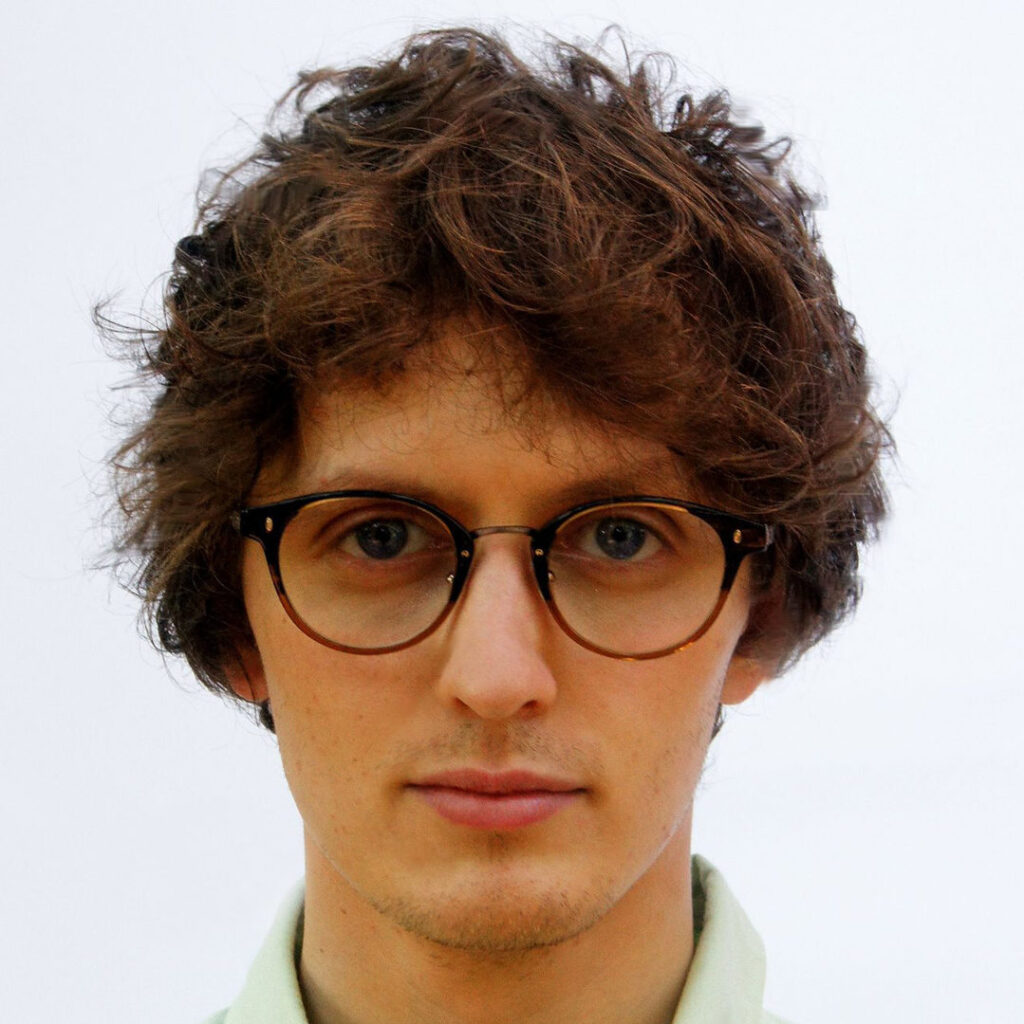
Karol Gietka is a Postdoctoral Researcher in theoretical physics at the University of Innsbruck, where he works within the Cavity Quantum Electrodynamics research group. His research focuses on quantum metrology in interacting quantum systems, with particular emphasis on critical and anti-critical quantum metrology. He investigates how high-precision parameter estimation can be achieved beyond standard criticality-based approaches, notably using models such as the quantum Rabi model. In 2025, he was awarded the Liechtenstein Prize for Outstanding Scientific Research in recognition of his contributions to quantum science.
Marco Di Liberto
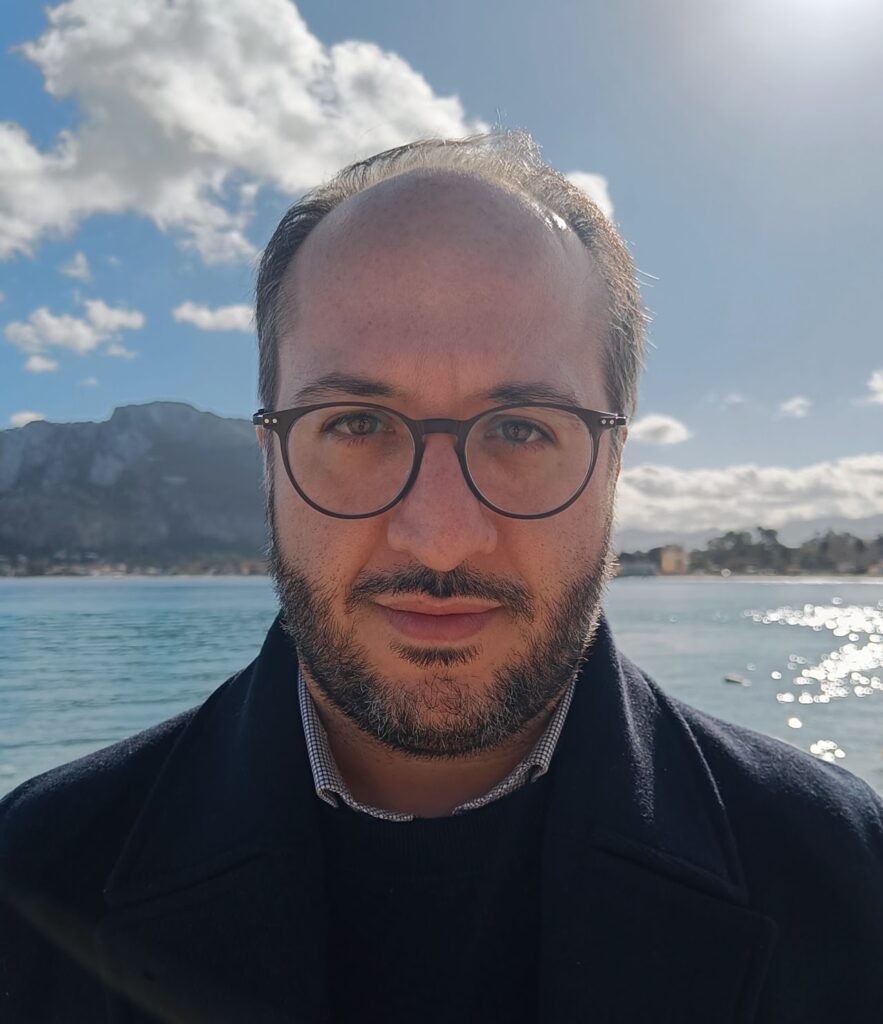
Marco Di Liberto is an Associate Professor at the University of Padua, Department of Physics and Astronomy “Galileo Galilei,” and a Fellow of the Padua Quantum Technologies Research Center QTECH. His research lies at the interface of quantum simulation and condensed matter theory, with a focus on quantum-engineered atomic and photonic systems. He investigates few- and many-body physics, topological states of matter, Floquet-driven systems, and quantum engineering platforms based on ultracold atoms, Rydberg atoms, and photonic lattices.
Hanns-Christoph Nägerl
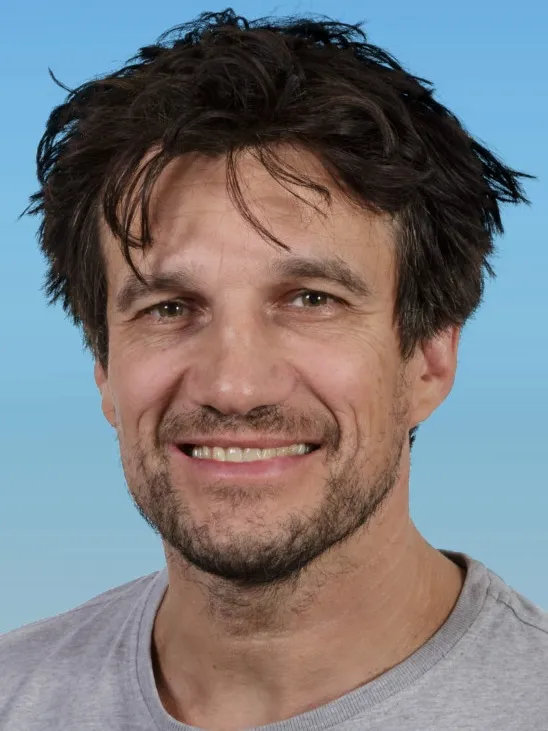
Hanns-Christoph Nägerl is a full professor of physics at the University of Innsbruck and a leading figure in the field of ultracold quantum many-body systems. He is internationally recognized for pioneering work on atomic quantum wires and molecular quantum gases, with research focused on quantum gases near absolute zero as platforms for simulating complex many-body dynamics beyond the reach of classical computation. In recent years, his group has realized high-density molecular quantum gases in the nanokelvin regime. Supported by an European Research Council Advanced Grant, he is developing molecular quantum simulators based on polar potassium–cesium molecules to explore quantum magnetism, novel forms of superfluidity, and mechanisms relevant to high-temperature superconductivity. His work also has implications for precision metrology and tests of fundamental physical constants. After doctoral training under Rainer Blatt and postdoctoral research at Caltech, Nägerl established his career in Innsbruck, becoming full professor in 2011. His contributions have been recognized by major awards, including the Wittgenstein Prize, ERC grants, the START Prize, and the Rudolf Kaiser Prize.
Sylvain Nascimbene
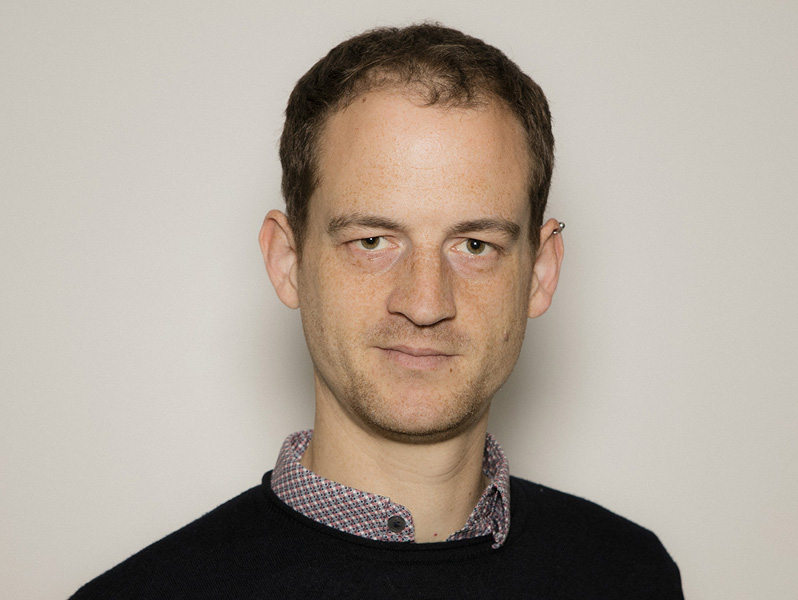
Sylvain Nascimbène is a Professor of Physics at the École Normale Supérieure and a researcher at the Laboratoire Kastler Brossel. He is also a Junior Member of the Institut universitaire de France. His research focuses on ultracold atomic gases, with particular emphasis on dysprosium and rubidium systems, addressing quantum-enhanced sensing, quantum simulation of topological phases, and low-dimensional Bose gases.He has coordinated several major competitive projects, including the ERC Starting Grant TOPODY on topological matter with atomic dysprosium and the ANR project HIGHDY (2025–2028) on high-dimensional entanglement in dysprosium condensates. His work places ultracold atoms at the forefront of studies of quantum Hall physics, entanglement, and exotic quantum matter.
Krzysztof Sacha
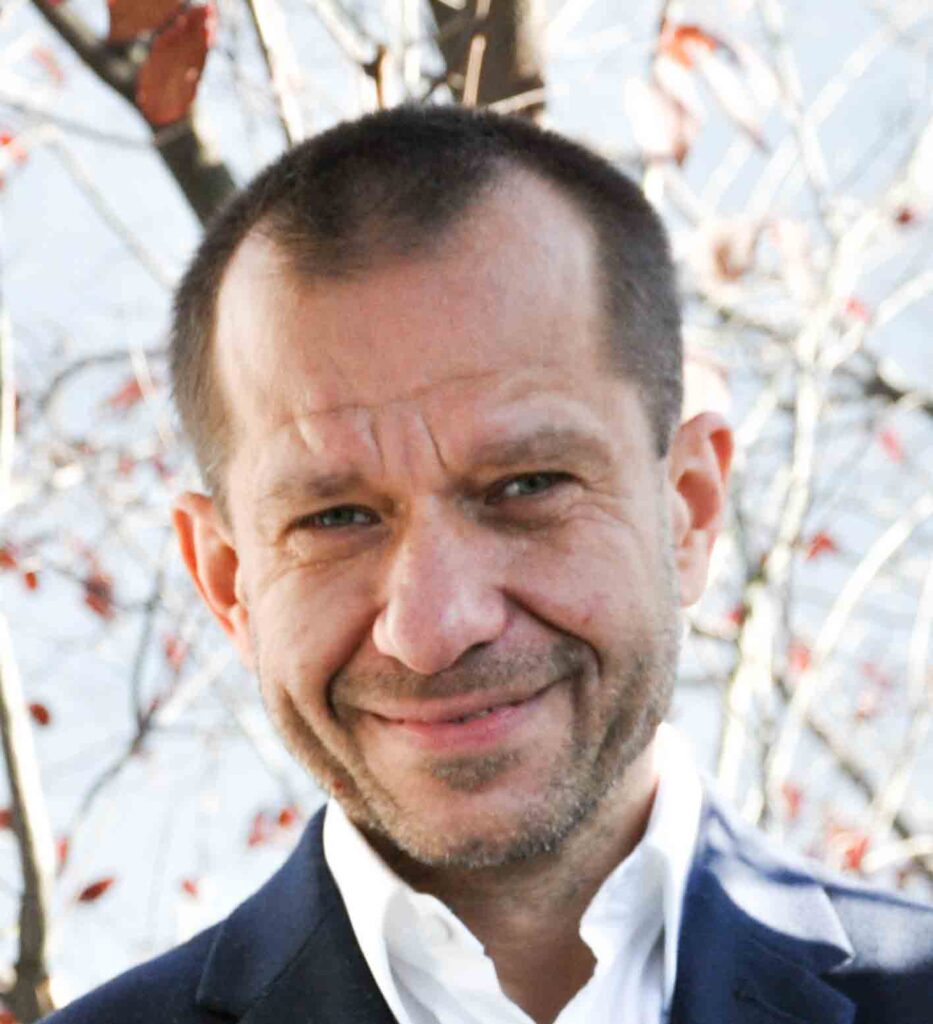
Krzysztof Sacha is a Professor, a pioneering theoretical physicist and the leader of the Time Crystals Group at the Marian Smoluchowski Institute of Physics, Jagiellonian University. He is a founder of timetronics, a research field exploring the use of time crystals and time-domain phases of matter. His work has been central to the theoretical formulation of discrete time crystals and to demonstrating how crystalline order, localization, and topological phases can emerge in the time dimension. Building on early inspiration from Frank Wilczek’s proposal, Sacha and collaborators proposed realizations of time crystals in periodically driven quantum systems, helping to establish the field. His research also spans ultracold atomic gases, collective excitations, optical lattices, disordered and topological systems, and foundational aspects of quantum measurement. His contributions have been recognized with major awards, including the Foundation for Polish Science Award (2024) for the formulation of time crystal theory, and are supported by competitive international funding, including NCN MAESTRO and Australian Research Council projects.
Ulrich Schneider
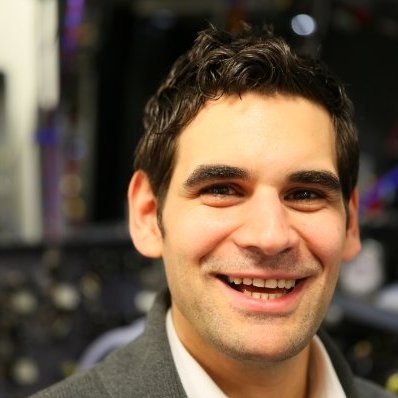
Prof. Ulrich Schneider joined the University of Cambridge in 2015. Prior to this, he was a Senior Scientist and Group Leader in the Quantum Optics group at Ludwig-Maximilians-Universität Munich. He received his PhD from Johannes Gutenberg University Mainz under the supervision of Prof. Immanuel Bloch and studied physics at the University of Kaiserslautern. His research focuses on quantum many-body dynamics, motivated by P. W. Anderson’s dictum “More is Different”, which emphasizes that genuinely new phenomena emerge when many particles interact. Examples of such emergent behaviour include superfluidity and magnetism. Prof. Schneider has received numerous honours, including the IOP 2023 Joseph Thomson Medal, the 2016 Rudolf Kaiser Prize, and the 2015 Aspen Winter Prize. His research is supported by major funding awards, including an ERC Starting Grant (2016), an ERC Consolidator Grant (2021), and several UKRI grants, including Programme Grants and funding through the UK Quantum Technology Hubs.
Ian Spielman

Ian B. Spielman is a Fellow of the Joint Quantum Institute and a NIST Fellow at the National Institute of Standards and Technology. His research operates at the interface of condensed matter and atomic physics, using ultracold atoms to realize and probe strongly correlated many-body quantum systems.His experimental program focuses on engineering synthetic gauge fields and spin–orbit coupling for neutral atoms, enabling bosons and fermions to emulate charged particles in magnetic fields and Rashba–Dresselhaus-type systems. Additional research directions include spin–orbit-coupled Bose gases in optical lattices, machine-learning-assisted cold-atom experiments, and the realization of engineered open quantum systems via weak measurement and feedback. His contributions have been widely recognized through major honors, including the APS Rabi Award, the NIST Stratton Award, and repeated designation as a Clarivate Highly Cited Researcher.
Leticia Tarruel
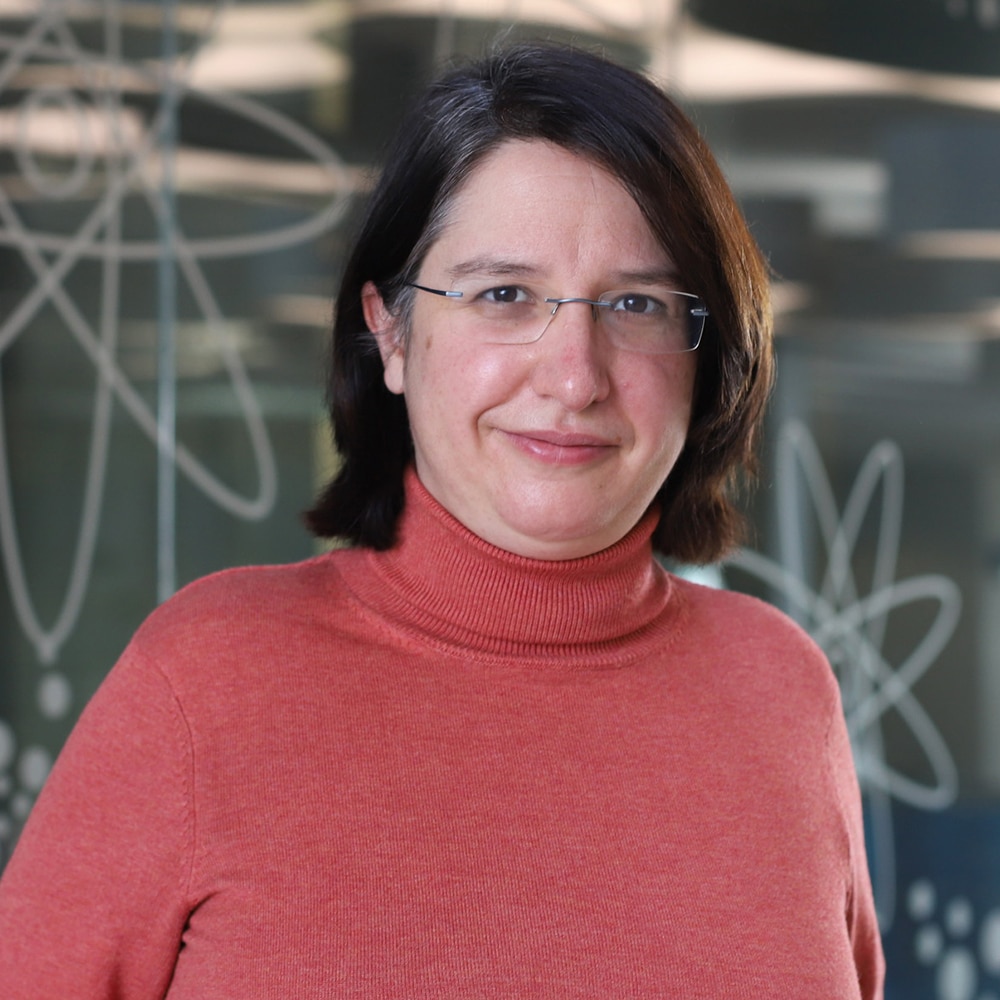
Leticia Tarruell is an experimental physicist at the interface of atomic and condensed matter physics and an ICREA Professor at ICFO – The Institute of Photonic Sciences, where she leads the Ultracold Quantum Gases group. Her research focuses on the experimental quantum simulation of many-body physics with ultracold atoms, including superfluid Fermi gases, strongly correlated Hubbard models, quantum magnetism, artificial graphene, quantum droplets, and artificial gauge fields. After training at École Normale Supérieure and ETH Zurich, and a research position at the Institut d’Optique, she joined ICFO in 2013, where she established Spain’s only experimental group dedicated to quantum simulation with ultracold gases and realized the first Spanish Bose–Einstein condensate in 2015. Her work has been recognized with major awards and is supported by an ERC Consolidator Grant, while her group pursues multiple experimental platforms, including strontium optical lattices and programmable Rydberg-atom arrays for gauge theories.
Konrad Viebahn
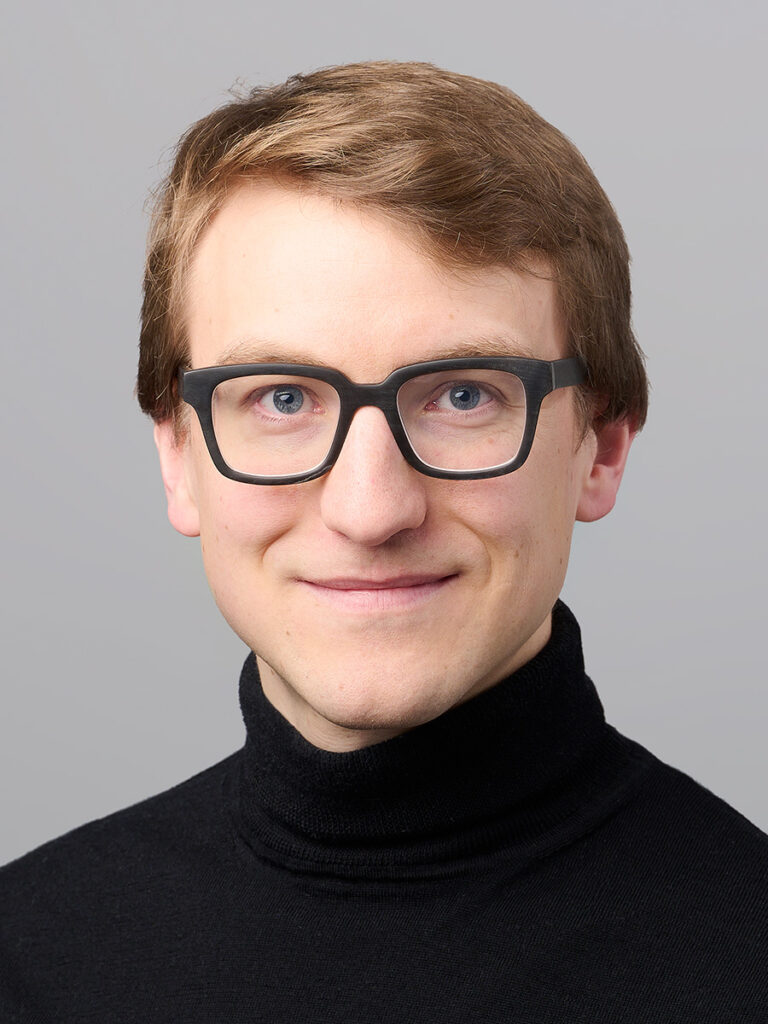
Konrad Viebahn is a physicist at ETH Zürich, Institute for Quantum Electronics, where he is an ETH Fellow, Postdoctoral Researcher, and Junior Group Leader within the Quantum Optics Group. His research focuses on ultracold atoms in optical lattices as a platform for quantum simulation, quantum information science, and scalable quantum computing. His work addresses strongly correlated quantum matter, including the Fermi–Hubbard model, dynamical gauge fields, Floquet-engineered systems, quasicrystals, and topological phases. In an ERC-funded project, he aims to develop a quantum computing architecture based on ultracold atoms manipulated in optical lattices, leveraging precise atomic control and inherent scalability to enable large-scale quantum processors.
David Wilkowski
David Wilkowski is an Associate Professor in the Division of Physics and Applied Physics at Nanyang Technological University and a Principal Investigator at the Centre for Quantum Technologies and the Centre for Disruptive Photonic Technologies. His research centers on ultracold atomic gases, spanning quantum simulation with non-Abelian gauge fields, quantum sensing with atomic clocks and interferometers, neutral-atom quantum processors (analog and digital), and nanophotonic platforms for extreme light–matter coupling. Trained in France and Italy, Wilkowski earned his PhD at the University of Lille I and held academic positions in Europe before moving to Singapore, where he has led research programs at NUS and NTU. His work integrates atomic physics, photonics, and quantum information science to develop both fundamental tests and scalable quantum technologies.
Emilia Witkowska
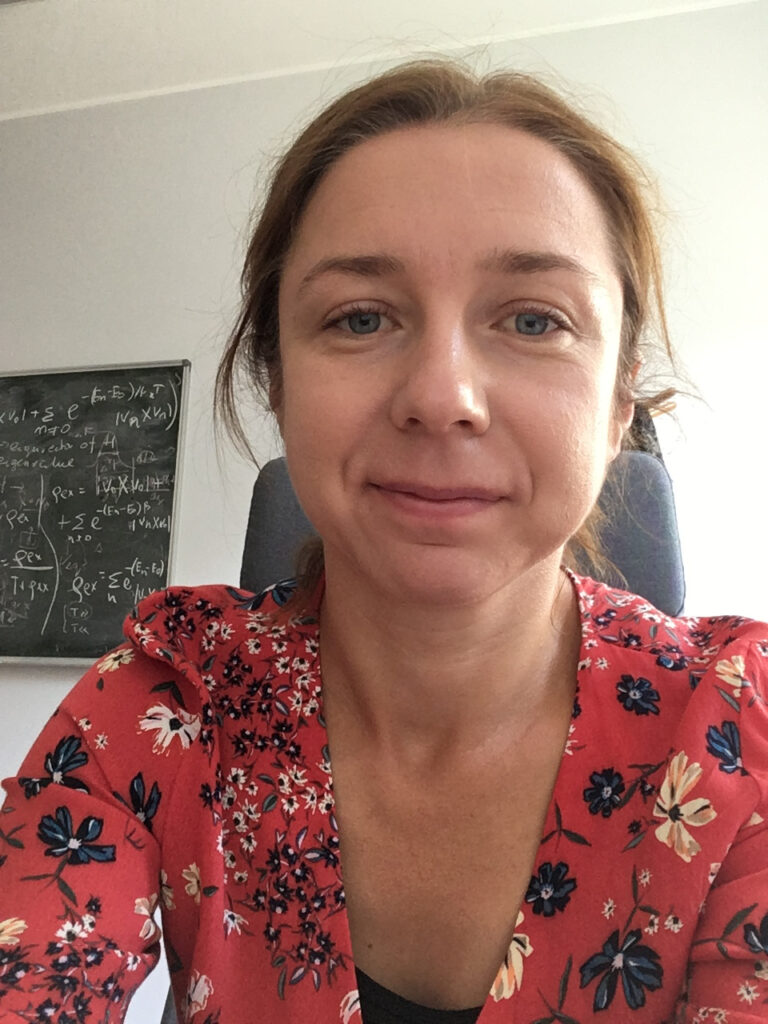
Emilia Witkowska is a theoretical physicist and Professor (prof. IF PAN) at the Institute of Physics, Polish Academy of Sciences, where she also serves as Head of the Division of Theoretical Physics. Her research focuses on fundamental aspects of quantum mechanics in ultracold atomic systems, with particular emphasis on Bose–Einstein condensates, thermal and semi-classical field methods, and quantum correlations.Her work addresses quantum metrology with atoms, generation of spin-squeezed and entangled many-body states, and applications of quantum phase transitions. She leads and participates in several competitive national research projects funded by the National Science Centre (NCN), including studies of dipolar ultracold gases, spin–orbit coupling, and Bell correlations in spinor Bose–Einstein condensates.
Jakub Zakrzewski
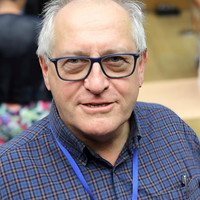
Jakub Zakrzewski is a Full Professor and Head of the Atomic Optics Department at the Marian Smoluchowski Institute of Physics, Jagiellonian University, and leader of QuantLab at the Mark Kac Complex Systems Research Center. His research spans quantum optics, laser theory, quantum chaos, and ultracold atoms in optical lattices, with particular emphasis on disorder, periodically driven many-body systems, lattice gauge theories, and quantum simulation. He has coordinated and contributed to numerous national and European projects, including initiatives on dynamical gauge fields, many-body localization, cavity QED realizations of spin and Hubbard models, and Quantum Flagship/QuantERA programs. His recent work focuses on symmetry-protected topological phases, dipolar systems, and quantum-enhanced metrology, and he has contributed to the theory and history of time crystals.
Oded Zilberberg
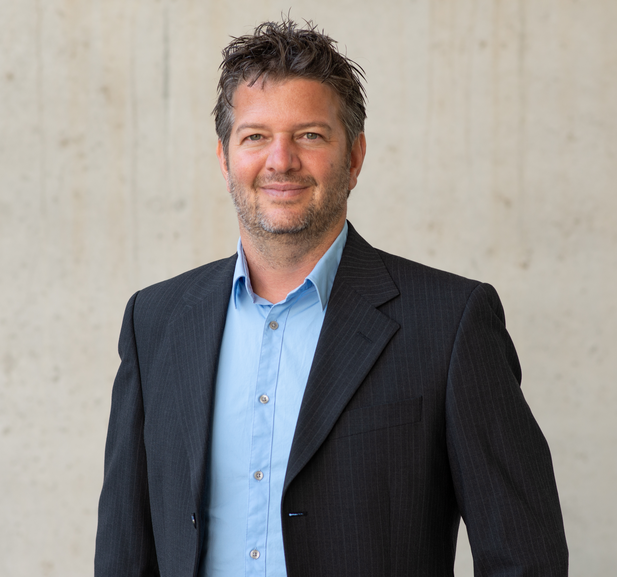
Oded Zilberberg is a W3 Heisenberg Professor (DFG) of Physics at the University of Konstanz, where he leads the Quantum Engineered Systems Theory group. His research focuses on exotic material properties emerging in engineered quantum platforms, with emphasis on topology, nonequilibrium dynamics, and controllability in interacting, driven, and dissipative systems. His work spans topological states in quasiperiodic models, many-body localization, artificial dimensions and gauge fields in metamaterials, and parametrically driven light–matter systems, as well as quantum transport and weak-measurement phenomena in mesoscopic devices. Zilberberg’s research is strongly theory-driven while maintaining close synergy with experiments, aiming to connect fundamental quantum physics with novel device concepts.
ORGANISING INSTITUTIONS